The coastal breeze is fantastic, right up until the peak of summer hits Los Angeles County. You hear your cooling system kick on, but after a few minutes you realize the vents are blowing room-temperature air.
Dealing with an ac not cooling your house is incredibly frustrating. You are paying for the electricity to run the machine, but you are getting absolutely none of the comfort. Before you panic and assume you need to buy a brand-new unit, realize that this is a very common issue with a wide range of causes.
Sometimes the fix is a simple two-minute task you can handle yourself. Other times, the unit has suffered a mechanical failure that requires professional diagnostic tools. Here is the direct breakdown of why your system is struggling and exactly what you should do next to get your home back to a comfortable temperature.
1. The Thermostat Settings Are Tricking You
When you are sweating in your living room and wondering why your AC is not cooling, the absolute first place to look is your thermostat. It sounds almost too simple, but thermostat settings get bumped all the time accidentally.
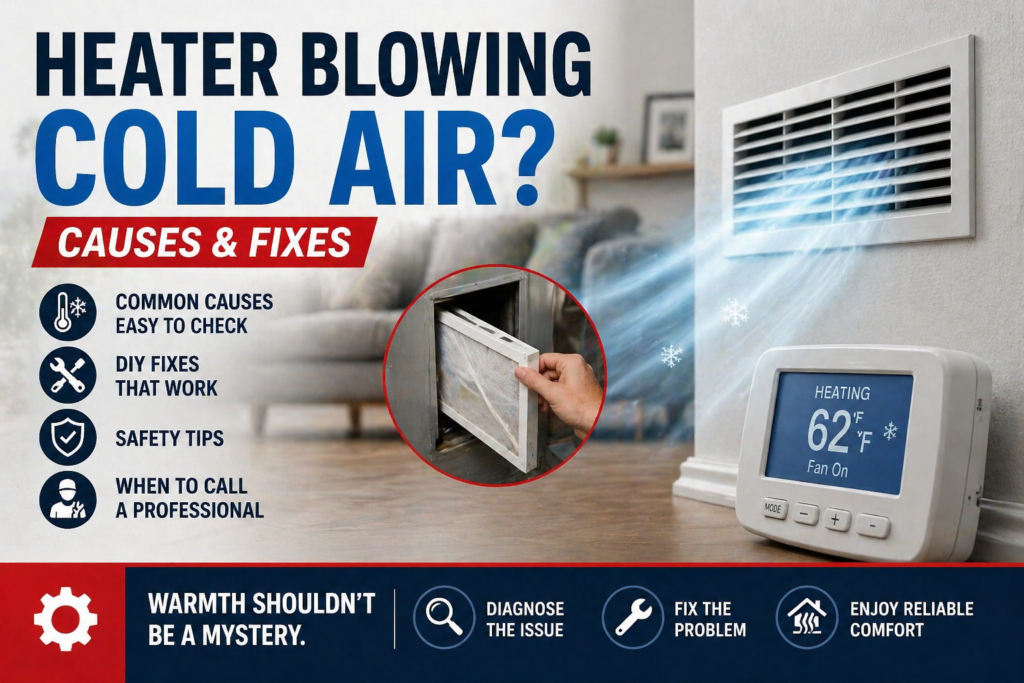
Check the fan setting on your digital display. It should be set to “Auto,” not “On.”
If the fan is set to “On,” the indoor blower motor will run continuously, 24 hours a day, even when the outdoor condenser unit is taking a break. This perfectly explains an AC running but not cooling, as the system is simply circulating the existing warm air from your hallways directly back into your living room. Switch the fan back to “Auto” and wait five minutes to see if the air gets cold.
2. A Suffocated System Due to a Dirty Filter
Your system needs to breathe to function properly. A filthy air filter is the single most common cause of restricted airflow in residential homes.
When the filter becomes caked with dust, pet hair, and microscopic pollen, the blower motor has to strain just to pull air through the material. If the air cannot easily pass through the filter, it cannot reach the internal chilling components.
Pull your filter out and hold it up to a nearby light or window. If you cannot see light passing through the pleated material, throw it in the trash. Installing a fresh, clean filter will immediately restore the air pressure and often solve the issue of an air conditioner not cooling without needing a service call.
3. A Blocked Outdoor Condenser Unit
Your outdoor unit does the heavy lifting of releasing the heat pulled from inside your home. In Long Beach, our yards are full of foliage, dirt, and coastal moisture. If shrubs, tall grass, or piles of leaves are crowding the metal cabinet of your outdoor unit, it cannot properly exhaust that heat.
When the heat gets trapped, the system overheats and stops chilling the air. Walk outside and clear a two-foot perimeter around the entire metal box. You can also take a standard garden hose—never a high-pressure washer, which will bend the delicate metal—and gently rinse the dirt and salt residue off the outside fins. This simple yard work restores proper airflow and helps the machine breathe.
4. A Frozen Evaporator Coil
It seems ironic that you could have a problem with ice during a sweltering Los Angeles heatwave, but a frozen evaporator coil is a massive problem.
Your indoor unit houses this specific coil, which absorbs heat from your rooms. If airflow drops significantly (usually due to that dirty filter we mentioned earlier), the temperature of this metal coil will plummet below freezing. The natural coastal humidity in the air will hit the freezing metal and instantly turn into solid ice.
A frozen coil completely blocks the chilling cycle, resulting in your AC blowing warm air instead of the relief you want. If you open your indoor cabinet and see a block of ice, or if you see white frost building up on the copper pipes running outside, turn the thermostat completely off. Let it thaw for a full 24 hours. Running the machine while it is frozen will permanently destroy the motor.
5. Low Refrigerant (You Have a Leak)
Many homeowners mistakenly believe that air conditioners consume refrigerant like a car consumes gasoline. They do not. Air conditioners circulate refrigerant in a closed, sealed loop.
Therefore, if your chemical pressure is low, you absolutely have a physical leak somewhere in the copper lines. When the system lacks enough refrigerant, it cannot absorb the heat from your home. This leads directly to an AC working but not cooling your rooms.
Because of the strict environmental regulations in California, you cannot simply buy refrigerant and top it off yourself. A licensed technician must use specialized electronic leak detectors to find the microscopic hole, patch the copper line, and recharge the system to the exact factory specifications.
6. A Dead Electrical Capacitor
Your outdoor unit contains a small, cylindrical part called a capacitor. It acts like a massive battery, sending a massive jolt of electricity to jump-start the heavy compressor motor every time the cooling cycle begins.
Capacitors endure extreme heat and heavy workloads, making them one of the most frequent parts to fail. If the capacitor dies, your indoor fan will continue to blow air, but the outdoor compressor will never turn on to actually chill it.
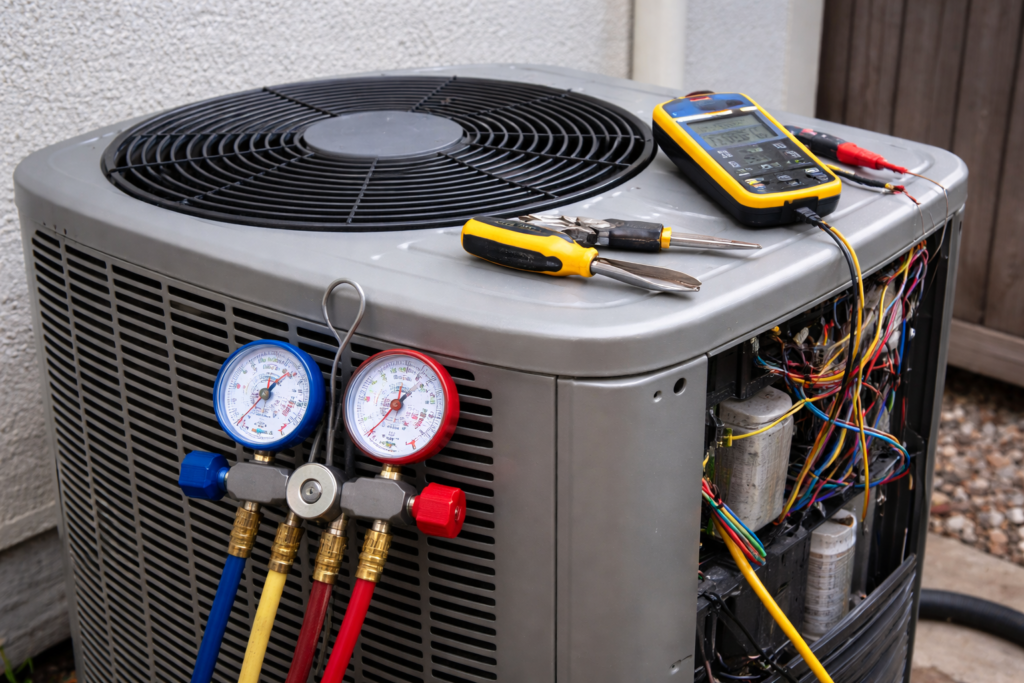
You might hear a faint clicking or buzzing sound from the outdoor unit as it tries and fails to start. A certified technician can test the electrical draw with a multimeter and swap out a dead capacitor in under an hour, getting your house cold again quickly.
7. A Failing Compressor
The compressor is the absolute heart of your entire setup. It pressurizes the refrigerant and forces it through the coils, making the entire heat transfer process possible.
If the compressor seizes up due to old age, electrical burnout, or operating with a frozen coil, the entire cycle instantly stops. Dealing with salt air corrosion near the beach also degrades these heavy outdoor components much faster than inland systems.
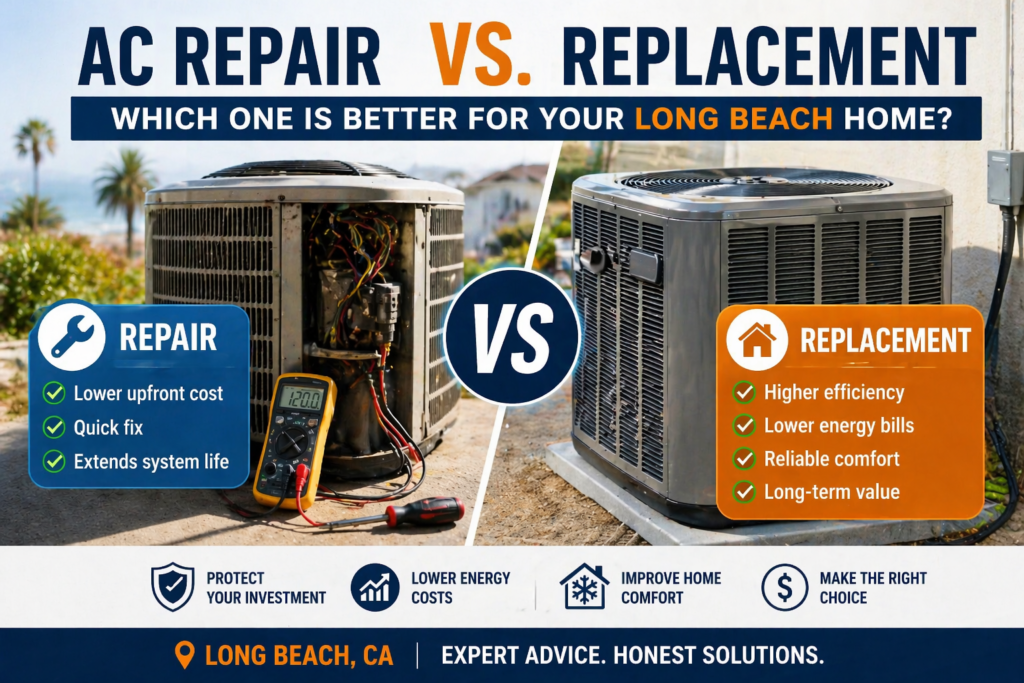
Compressor replacement is highly complex and usually the most expensive fix in the HVAC industry. If your system is over ten to twelve years old and the compressor dies, it is usually a smarter financial move to replace the entire outdoor unit rather than attempting to patch up a dying machine.
8. Leaky Air Ducts Stealing Your Cold Air
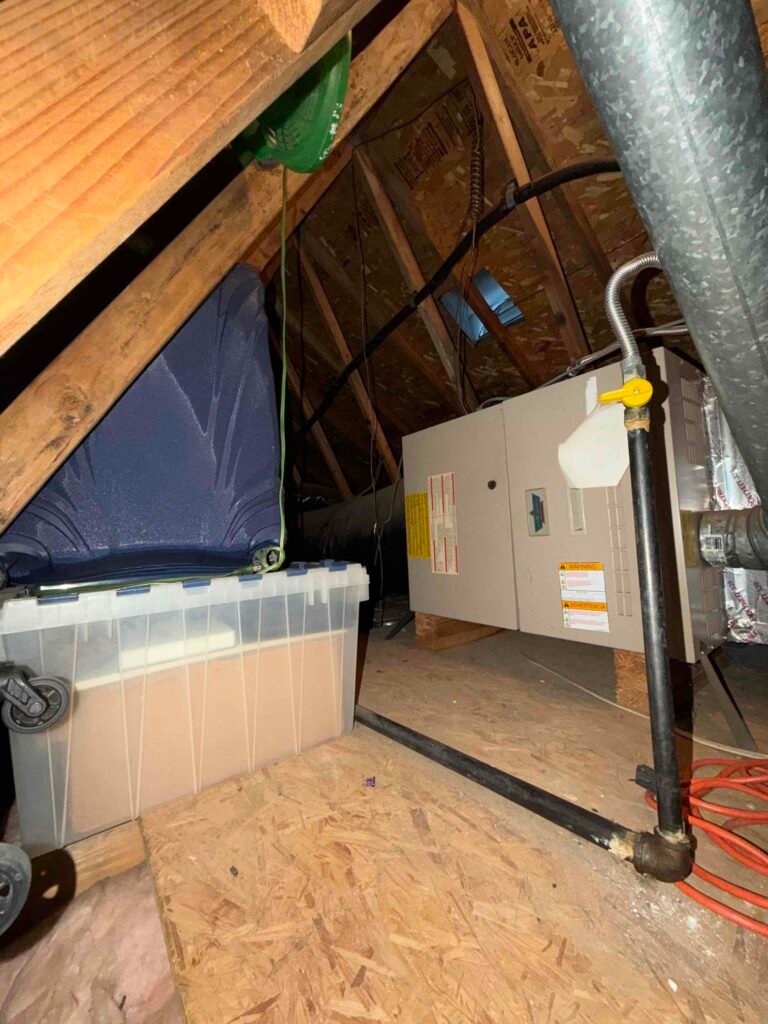
Sometimes the mechanical equipment is working flawlessly, but the cold air never actually makes it to your bedroom. If your system sounds fine but your rooms are still hot, the problem is likely hiding above your ceiling or beneath your floors.
Old ductwork can tear, crush, or disconnect at the seams over time. When this happens, you end up pumping perfectly chilled air into your dark, empty attic instead of your living spaces.
Having a professional inspect and seal your ductwork will immediately stop the leaks and force the air pressure back to your vents.
Taking the Next Steps Toward Comfort
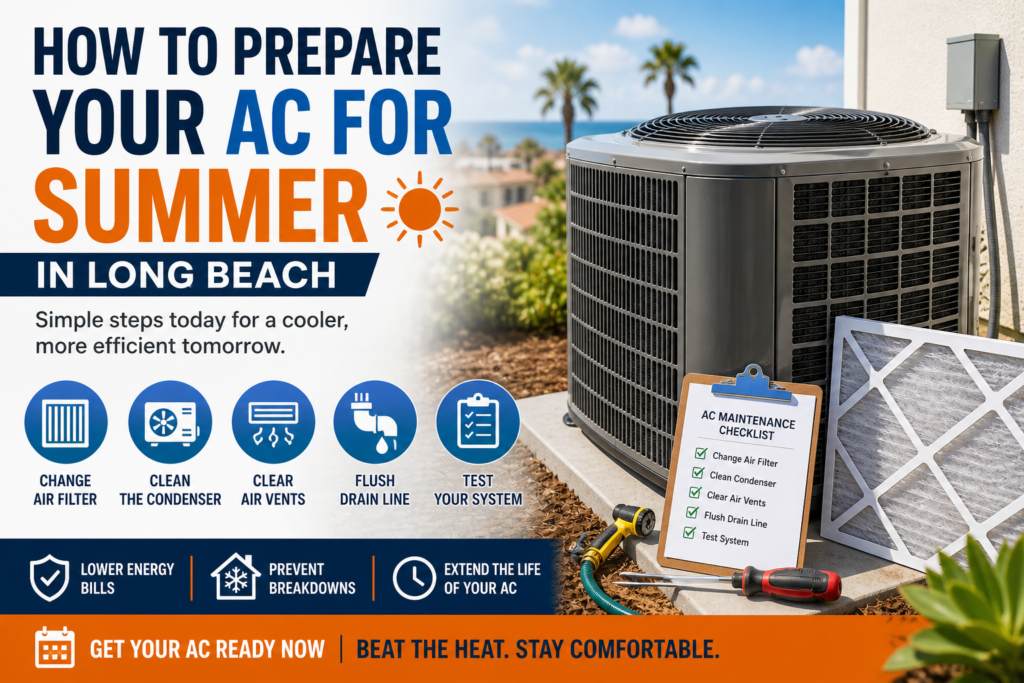
Sitting in a sweltering living room is stressful, but taking a logical, step-by-step approach to the problem always helps. Start by checking your thermostat, replacing that filthy air filter, and clearing the brush away from your outdoor unit.
If those quick DIY steps do not solve the problem, do not attempt to open the electrical panels or handle the high-pressure refrigerant lines yourself. When the basic troubleshooting fails, it is time to call in the experts.If you are dealing with an ac not cooling and the temperature is rising, reach out to a certified local professional. A fast, accurate diagnosis will protect your expensive equipment from further damage and get your Long Beach home back to the comfortable oasis it should be.